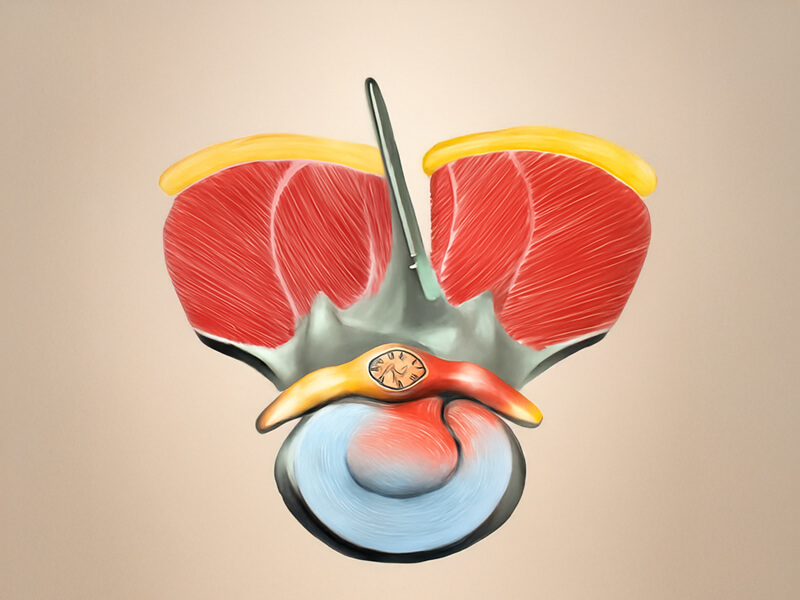
Microdiscectomy – Treatment of Lumbar Herniated Disc
Pax Medicus connects patients with experienced spinal surgeons who specialise in microdiscectomy – a minimally invasive procedure designed to treat lumbar herniated discs. This surgery removes disc material that is pressing on nerve roots, alleviating pain, improving mobility, and promoting quicker recovery compared to traditional open surgery methods.
What is an Intervertebral Disc?
Intervertebral discs are located between the vertebrae and allow movement while also absorbing the forces acting on the spine. Each disc consists of:
How Does a Herniated Disc Develop?
A herniated disc occurs when the nucleus pulposus protrudes towards the annulus fibrosus, and the herniation can progress through three stages:
What Are the Symptoms of a Herniated Disc?
The main symptoms of a herniated disc are caused by nerve compression and may include:
What Are the Causes of a Herniated Disc?
Several factors contribute to the development of a herniated disc, including:
How is a Herniated Disc Diagnosed?
Diagnosis of a herniated disc involves imaging tests:
What Does the Treatment of a Herniated Disc Involve?
The first-line treatment for a herniated disc is conservative (non-surgical), focusing on:
Incision
1–2 cm (minimally invasive)
Procedure duration
~1 hour
Anaesthesia
General
What Are the Benefits of Microdiscectomy?
Your journey step by step
Examination & MRI review
Conservative vs surgical options
Microdiscectomy via small incision
Early mobilisation & short stay
Rehabilitation & progress review
Rehabilitation & progress review
What is the Recovery Process After Microdiscectomy?
The first-line treatment for a herniated disc is conservative (non-surgical), focusing on:
Regular physiotherapy and rehabilitation play an important role in the recovery process.
Disclaimer
*The Pax Medicus website provides information for guidance only and does not constitute medical advice, diagnosis, or treatment. Pax Medicus does not provide healthcare services and is not a substitute for consultation with a qualified medical professional. Always seek advice from your physician regarding any medical condition. Prices shown are indicative only and subject to confirmation by the healthcare provider. This is the official website of Pax Medicus; we do not operate through agents or third-party sites.
BOOK YOUR CONSULTATION TODAY
Simply fill in the form below and our team will get back to you as soon as possible.