


Sleeve Gastrectomy
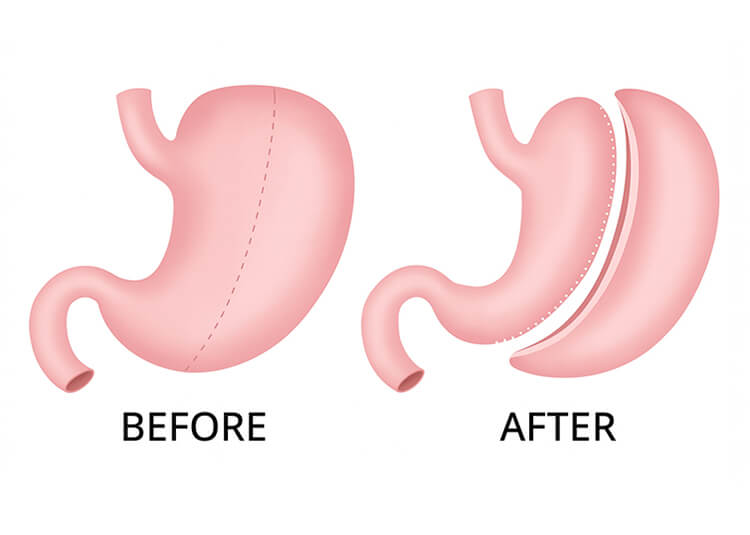
Sleeve gastrectomy is a surgical procedure where part of the stomach is removed and the remaining portion is reshaped into a narrow tube. This reduces the amount of food a patient can consume, leading to rapid weight loss.
As part of the bariatric treatment programme, patients also receive support from a:
Care is provided both during and after hospitalisation.
Sleeve gastrectomy is a method primarily recommended for patients with a Body Mass Index (BMI) between 35 and 40 who also suffer from obesity-related conditions such as hypertension, sleep apnoea, or type 2 diabetes. For patients with a higher BMI, this procedure is also advised, particularly when obesity is accompanied by significant risk factors that prevent the performance of more advanced surgical interventions. In such cases, a staged approach is often adopted, with sleeve gastrectomy recommended as the first step. Once significant weight reduction is achieved and risk factors are minimised, a second stage, usually a gastric bypass, may be considered. Sleeve resection is also a suitable solution for individuals diagnosed with bowel diseases or those who have previously undergone intestinal surgery and are expected to have extensive adhesions. This type of surgery is also recommended for patients at extreme age groups, particularly the very young or elderly. The procedure is generally not advised for patients with gastro-oesophageal reflux disease.
Who is sleeve gastrectomy recommended for?
with hypertension, sleep apnoea, or type 2 diabetes
when advanced surgery is too risky (first-stage option)
or prior intestinal surgery with adhesions
very young or elderly patients
Note: generally not advised for patients with gastro-oesophageal reflux disease (GORD/GERD).
What does sleeve gastrectomy involve?
60–90 min
Operation time
Up to 3 days
Hospital stay
~50%
Excess-weight loss in 6–12 months
How to prepare for the procedure?
What are the possible complications following the procedure?
Although sleeve gastrectomy is a safe and well-established procedure, some complications may occur:
Your journey step by step
eligibility assessment and treatment planning.
bloods, ECG, gastroscopy.
laparoscopic sleeve gastrectomy (60–90 minutes).
recovery, mobilisation, and diet start (up to 3 days).
staged diet over 4–6 weeks, with long-term specialist support.
staged diet over 4–6 weeks, with long-term specialist support.
Benefits of sleeve gastrectomy
Sleeve gastrectomy offers several important advantages for patients:
What does post-operative care and recovery involve?
Recovery after sleeve gastrectomy is generally quick, allowing patients to regain mobility within hours after the procedure. Most patients can stand and walk on the same day, which helps reduce the risk of complications.
For the first two weeks, a liquid or blended diet must be followed to allow the stomach to heal properly. Full recovery and a return to normal daily activities typically take around two weeks, although adhering strictly to dietary guidelines and gradual reintroduction of solid foods are essential for long-term success.
Disclaimer
*The Pax Medicus website provides information for guidance only and does not constitute medical advice, diagnosis, or treatment. Pax Medicus does not provide healthcare services and is not a substitute for consultation with a qualified medical professional. Always seek advice from your physician regarding any medical condition. Prices shown are indicative only and subject to confirmation by the healthcare provider. This is the official website of Pax Medicus; we do not operate through agents or third-party sites.
BOOK YOUR CONSULTATION TODAY
Simply fill in the form below and our team will get back to you as soon as possible.