


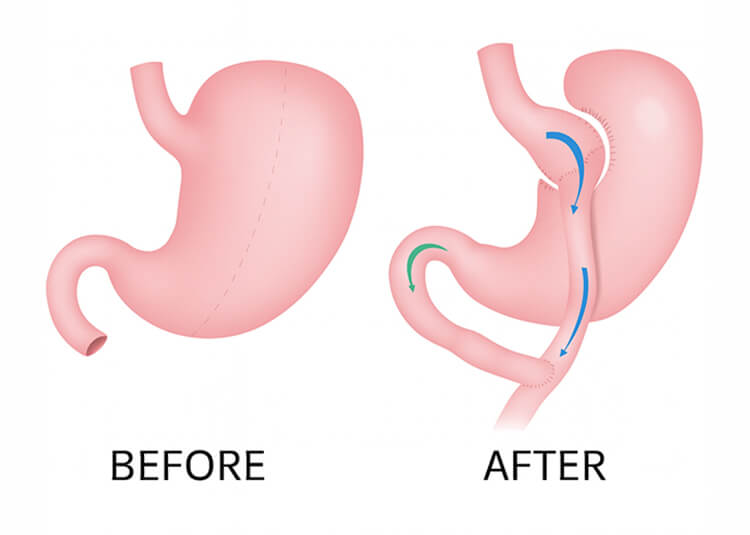
Gastric Bypass
A gastric bypass is a type of weight loss surgery that alters the digestive system to help individuals lose weight. It involves creating a small pouch at the top of the stomach, which is then connected directly to the small intestine, bypassing a large portion of the stomach and the first part of the small intestine. This reduces the amount of food the stomach can hold and limits calorie and nutrient absorption, leading to weight loss.
Who is gastric bypass recommended for?
with hypertension, sleep apnoea, or type 2 diabetes
often accompanying obesity
65–70% of excess body weight in 6–12 months
Note: Gastric bypass is actually recommended for patients with reflux, since it often improves or resolves GORD/GERD symptoms.
What does sleeve gastrectomy involve?
2–3 hours
Operation time
Up to 5 days
Hospital stay
~65–70%
Excess-weight loss in 6–12 months
How to prepare for the procedure?
What are the possible complications following the procedure?
Although gastric bypass is highly effective and widely performed, some complications may occur:
Regular follow-up and adherence to supplements and dietary guidance minimise risks.
Your journey step by step
eligibility assessment and planning
bloods, ECG, gastroscopy.
gastric bypass (2–3 hours)
recovery, mobilisation, and diet start (up to 3 days).
staged diet over 4–6 weeks, with long-term specialist support.
staged diet over 4–6 weeks, with long-term specialist support.
Benefits of gastric bypass
Gastric bypass offers several important advantages for patients:
What does post-operative care and recovery involve?
Recovery is structured to protect the new stomach pouch and bypass. Early mobilisation is encouraged to reduce risks. Patients follow a staged diet (starting with liquids) and must take prescribed supplements (B12, iron, calcium). Regular follow-ups are essential to monitor healing and nutrition.
Standard hospital stay: up to 5 days.
Disclaimer
*The Pax Medicus website provides information for guidance only and does not constitute medical advice, diagnosis, or treatment. Pax Medicus does not provide healthcare services and is not a substitute for consultation with a qualified medical professional. Always seek advice from your physician regarding any medical condition. Prices shown are indicative only and subject to confirmation by the healthcare provider. This is the official website of Pax Medicus; we do not operate through agents or third-party sites.
BOOK YOUR CONSULTATION TODAY
Simply fill in the form below and our team will get back to you as soon as possible.