


Umbilical Hernia Treatment
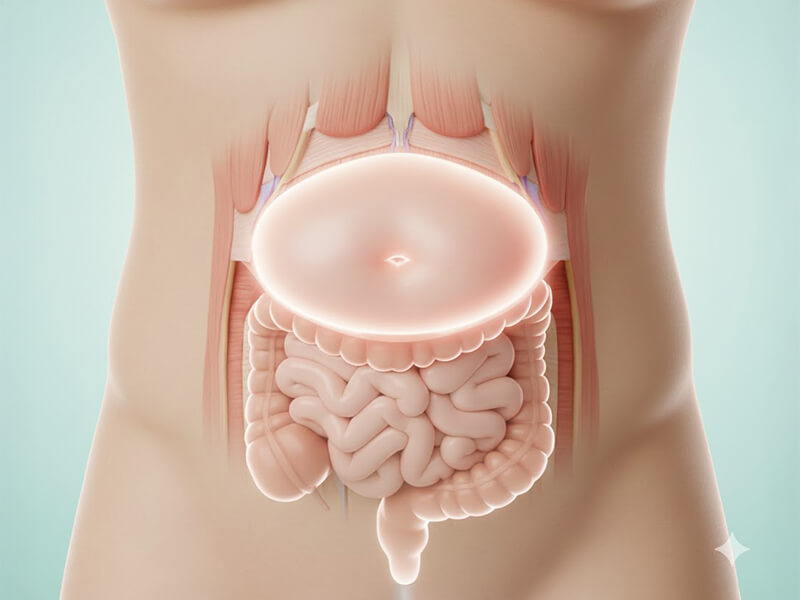
An umbilical hernia is a type of abdominal hernia in which abdominal contents, most commonly loops of intestine or parts of the peritoneum, protrude through an incompletely closed umbilical ring and the abdominal wall, creating a visible bulge near the navel.
Umbilical hernias are common in newborns but can also occur in adults and during pregnancy due to weakened abdominal muscles and increased pressure inside the abdomen. PAX MEDICUS medical tourism agency helps patients access modern umbilical hernia surgery and minimally invasive options at trusted partner hospitals abroad.
What Is an Umbilical Hernia?
An umbilical hernia is a type of abdominal hernia in which abdominal contents, usually loops of intestine or parts of the peritoneum, protrude through an incompletely closed umbilical ring and the abdominal wall. This creates a characteristic bulge near the navel, known as a hernia sac.
Umbilical hernias are commonly seen in newborns when the umbilical ring does not close naturally after birth. They can also develop in adults as a result of weakened abdominal muscles, and in pregnant women due to the pressure of the growing foetus on the abdominal wall.
What Are the Symptoms of an Umbilical Hernia?
In Infants
The hallmark symptom in infants is a soft, noticeable bulge around the navel. This is a common condition in newborns, and in most cases it resolves on its own by around 12 months of age as the abdominal muscles strengthen.
In Adults
In adults, umbilical hernias (often referred to as paraumbilical hernias) may cause:
Umbilical hernias usually have a mild course, but more severe symptoms may arise if the hernia becomes incarcerated, which poses a serious risk to the patient’s health and life.
Signs of possible incarceration (medical emergency) include:
In such cases, urgent consultation with a specialist and surgical treatment are necessary. If incarceration is not treated promptly, it can lead to intestinal obstruction or necrosis, which may be life-threatening.
What Are the Causes of an Umbilical Hernia?
In Infants
In infants, an umbilical hernia is an anatomical defect resulting from the failure of the umbilical ring to close after birth. This ring is the opening through which blood vessels from the umbilical cord passed during foetal development.
In Adults
In adults, umbilical hernias are typically caused by weakening of the abdominal wall, which often occurs with age. Factors that contribute to the development of an umbilical hernia include:
How Is an Umbilical Hernia Treated?
Children
In young children, umbilical hernias often resolve on their own without treatment. Surgery is recommended if:
Adults
In adults with small umbilical hernias that do not cause significant symptoms, periodic monitoring by a specialist may be sufficient. Surgery is considered when:
Hernioplasty (Umbilical Hernia Surgery)
The surgical procedure to repair the hernia, known as hernioplasty, can be performed using:
The procedure is performed under general anaesthesia and, depending on the size of the hernia, usually takes between 30 minutes and 1.5 hours.
During the operation, the surgeon returns the displaced contents to the abdominal cavity. The edges of the defect are sutured, and in cases of large or recurrent hernias, a special mesh is placed beneath the peritoneum to reinforce the weakened abdominal wall and minimise the risk of recurrence.
What Are the Contraindications for Umbilical Hernia Surgery?
Contraindications for surgical repair of an umbilical hernia include:
Patients with the following conditions require detailed preoperative evaluation:
What Does Robotic Umbilical Hernia Surgery Involve?
For large or recurrent umbilical hernias, robotic surgery may be an option. Robotic procedures are carried out through several small incisions in the abdominal wall, through which the surgeon inserts miniature surgical instruments and a camera.
Unlike traditional or laparoscopic surgery, the surgeon does not stand directly next to the patient but controls the robotic arms from a console. Robotic surgery offers 10× magnification and FullHD image quality, improving precision and visibility.
Robotic techniques enable internal suturing of the abdominal wall, precise incisions, and release of muscle segments to close defects. Due to the location of umbilical hernias, these steps are often performed using open surgery in traditional methods, and laparoscopy may be technically challenging or impossible in some large hernias, for example those related to pregnancy.
In recent years, new robotic-specific procedures have been developed for such hernias. Minimally invasive techniques, including robotic surgery, result in:
According to data from one robotic manufacturer, including national registry information:
What Is the Recovery Process After Umbilical Hernia Surgery?
Hospitalisation after umbilical hernia repair depends on the scope of the procedure and the method used, but typically lasts between 1 and 3 days for operations performed under general anaesthesia.
In the first few days after surgery, anticoagulants should usually be avoided unless otherwise advised by the doctor. Intense physical activity and heavy lifting should be limited for the first month.
After about 4 weeks, special exercises to strengthen the abdominal muscles are recommended, following the surgeon’s or physiotherapist’s guidance.
What Is the Cost of Umbilical Hernia Surgery?
The cost of umbilical hernia repair depends on several factors, including:
All details of the procedure and its options are discussed with the patient and the treating surgeon during the preoperative consultation to qualify for surgery.
Disclaimer
*The Pax Medicus website provides information for guidance only and does not constitute medical advice, diagnosis, or treatment. Pax Medicus does not provide healthcare services and is not a substitute for consultation with a qualified medical professional. Always seek advice from your physician regarding any medical condition. Prices shown are indicative only and subject to confirmation by the healthcare provider. This is the official website of Pax Medicus; we do not operate through agents or third-party sites.
BOOK YOUR CONSULTATION TODAY
Simply fill in the form below and our team will get back to you as soon as possible.