


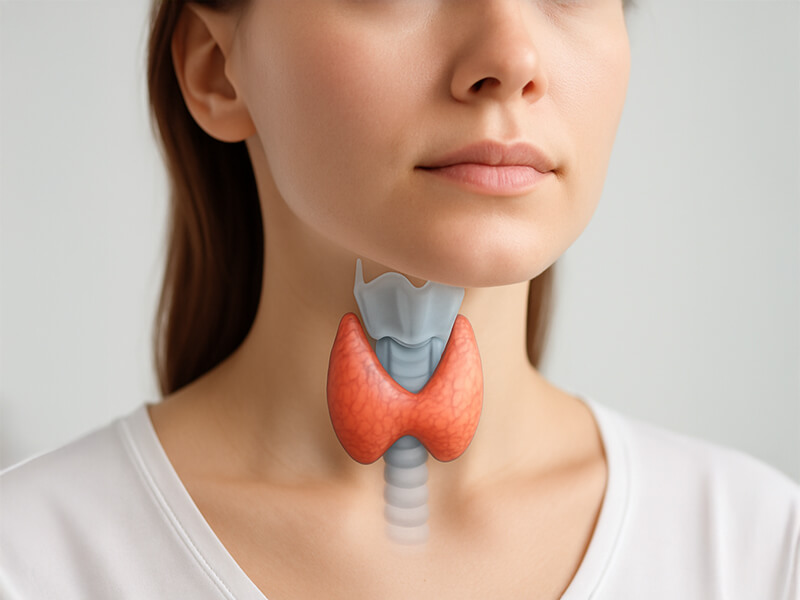
Thyroid Disorders
Thyroid disorders occur when the thyroid gland produces too much or too little hormone, or when structural changes such as nodules or goitre develop. Early diagnosis and treatment are important to prevent complications and maintain normal metabolic function.
Below you will find an overview of the most common thyroid disorders, their symptoms, causes, and diagnostic considerations.
What is the thyroid gland?
The thyroid is a small endocrine gland located at the front of the neck, just below the larynx. It consists of two lobes connected by a thin band of tissue called the isthmus. Despite its small size, the thyroid plays a crucial role by producing hormones (T4 and T3) that regulate metabolism, reproductive health, cardiovascular function, and the nervous system.
Thyroid activity is controlled by the hypothalamic–pituitary axis. The hypothalamus releases TRH, which stimulates the pituitary to produce TSH. TSH then signals the thyroid to release T4 and T3.
Symptoms of thyroid dysfunction may be subtle but can lead to serious health problems if untreated.
Main Thyroid Disorders
Hypothyroidism
Hypothyroidism occurs when the thyroid does not produce enough T4 and T3. The most common cause is autoimmune inflammation (Hashimoto’s thyroiditis). Symptoms include fatigue, weight gain, hair loss, dry skin, low mood, and difficulty concentrating. Treatment involves synthetic thyroid hormone replacement.
Hyperthyroidism
Hyperthyroidism is caused by excessive thyroid hormone production. Graves’ disease is the most frequent cause, followed by overactive nodules. Symptoms include anxiety, sweating, tremors, weight loss, palpitations, and menstrual changes. Treatment may include antithyroid medication, radioiodine, or surgery.
Nodular Goitre
Nodular goitre is an enlarged thyroid containing one or more nodules. It may cause visible neck swelling, pressure, difficulty swallowing, or shortness of breath. Causes include iodine deficiency, nutritional deficiencies, medication effects, and environmental factors.
Thyroid Cancer
Thyroid cancer is the most common endocrine malignancy, diagnosed in around 4,000 people each year in the UK. Warning signs include a neck lump, enlarged lymph nodes, voice changes, or rapid growth of a thyroid nodule. Diagnosis is confirmed by ultrasound and FNAB biopsy.
Detailed Overview of Thyroid Disorders
Disclaimer
*The Pax Medicus website provides information for guidance only and does not constitute medical advice, diagnosis, or treatment. Pax Medicus does not provide healthcare services and is not a substitute for consultation with a qualified medical professional. Always seek advice from your physician regarding any medical condition. Prices shown are indicative only and subject to confirmation by the healthcare provider. This is the official website of Pax Medicus; we do not operate through agents or third-party sites.
BOOK YOUR CONSULTATION TODAY
Simply fill in the form below and our team will get back to you as soon as possible.