


Thyroid Surgery
Surgical treatment of thyroid disorders is provided in cooperation with expert endocrine surgeons, including Professor Marcin Barczyński, PhD, DSc. Procedures range from diagnostic lobectomy to total thyroidectomy and lymph node dissection for thyroid cancer.
All operations are carried out in partner hospitals using advanced techniques to improve safety, protect the voice, and optimise cosmetic outcomes.
When is thyroid surgery recommended?
Oncological indications
Surgery is the main treatment when thyroid cancer is confirmed or strongly suspected. It is also considered when biopsy results are inconclusive but the risk of malignancy is high.
Enlarged goitre
Large goitres may compress the trachea or major veins, causing breathing or swallowing difficulties. In these cases, removing all or part of the thyroid helps relieve pressure.
Growing nodules & aesthetics
Rapidly enlarging nodules, lesions over 4 cm, or a visibly prominent goitre affecting neck appearance can also be indications for surgical treatment, even when hormone levels are normal.
Types of thyroid surgery
Total thyroidectomy
Removal of the entire thyroid gland, including the isthmus. Most often used for confirmed thyroid cancer, Graves’ disease or bilateral multinodular goitre.
Lobectomy
Removal of one thyroid lobe and the isthmus. This is usually performed for nodular goitre confined to a single lobe, or to confirm a small, localised thyroid cancer.
Subtotal thyroidectomy
Partial removal of the thyroid, leaving 50–90 % of the gland in place. It may be used in multinodular goitre, diffuse goitre, or advanced inflammatory disease such as Hashimoto’s thyroiditis.
Preparation and surgical technique
Before surgery, thyroid hormone levels are stabilised so that patients are euthyroid. On the day of operation, fasting for at least eight hours is required, and blood tests and medication adjustments are carried out according to the anaesthetist’s recommendations.
Conventional thyroid surgery is performed under general anaesthesia and usually takes 1–2 hours. A small incision is made low on the neck, allowing the surgeon to identify and protect the recurrent laryngeal nerves and parathyroid glands before removing part or all of the thyroid.
In high-risk or oncological cases, lymph node dissection may be done at the same time. A small drain is sometimes placed for 24 hours to remove fluid from the surgical area, and most patients are discharged after two days.
Protecting the voice: intraoperative neuromonitoring
One of the most important goals in thyroid surgery is to preserve the nerves that control the vocal cords. To support this, our partner hospitals use intraoperative neuromonitoring (IONM). During surgery, gentle electrical stimulation is applied to the recurrent laryngeal nerves. This allows the surgeon to identify the nerves with high accuracy and assess their function in real time, significantly reducing the risk of postoperative hoarseness or voice loss, especially in complex cases such as recurrent goitre, invasive thyroid cancer, or Graves’ disease.
TOETVA – scar-free transoral thyroid surgery
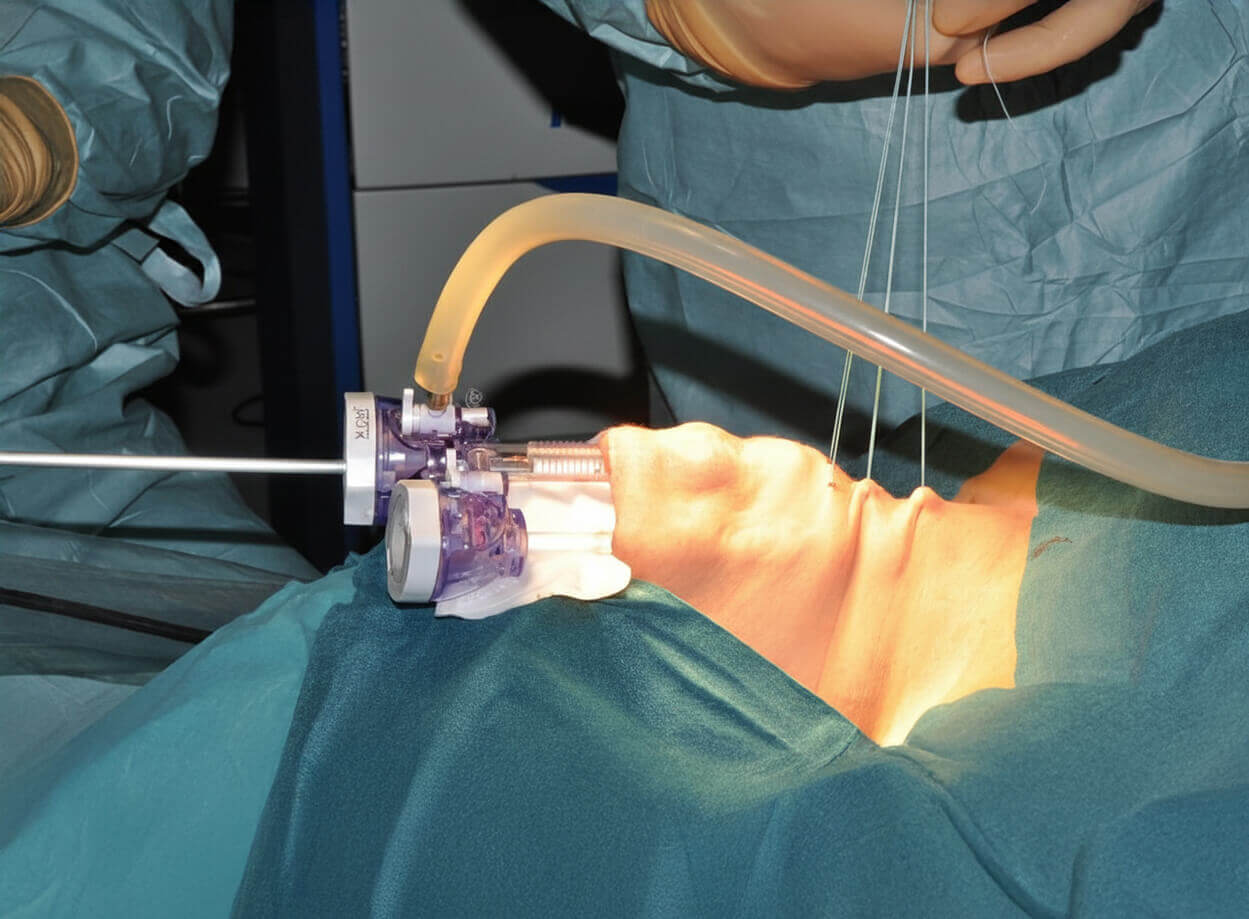
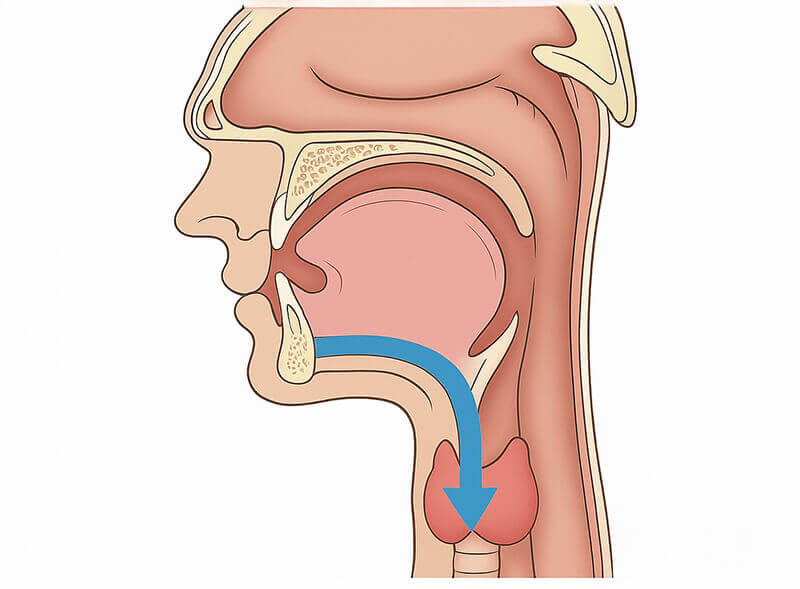
The Transoral Endoscopic Thyroidectomy Vestibular Approach (TOETVA) is a minimally invasive technique where the thyroid is accessed through the inner side of the lower lip. This avoids a visible neck scar while maintaining full control of the operative field with endoscopic instruments.
Incision planning and access route
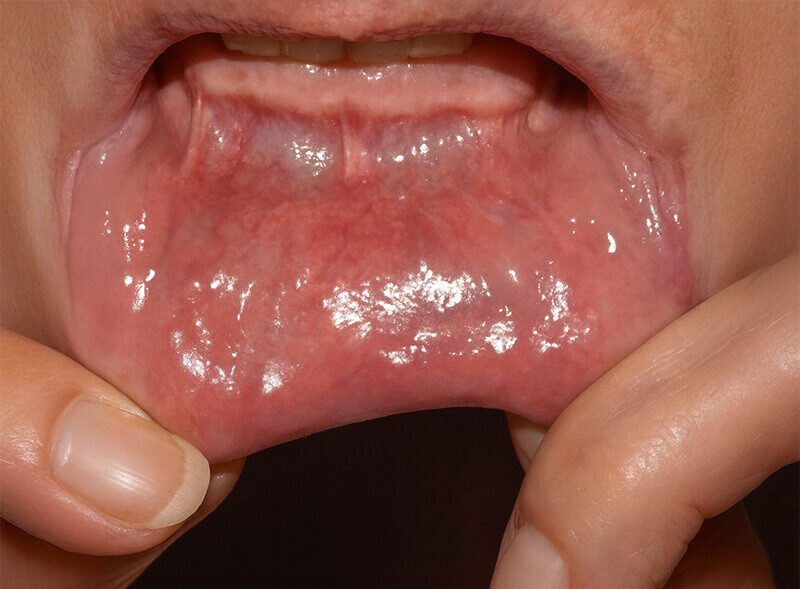
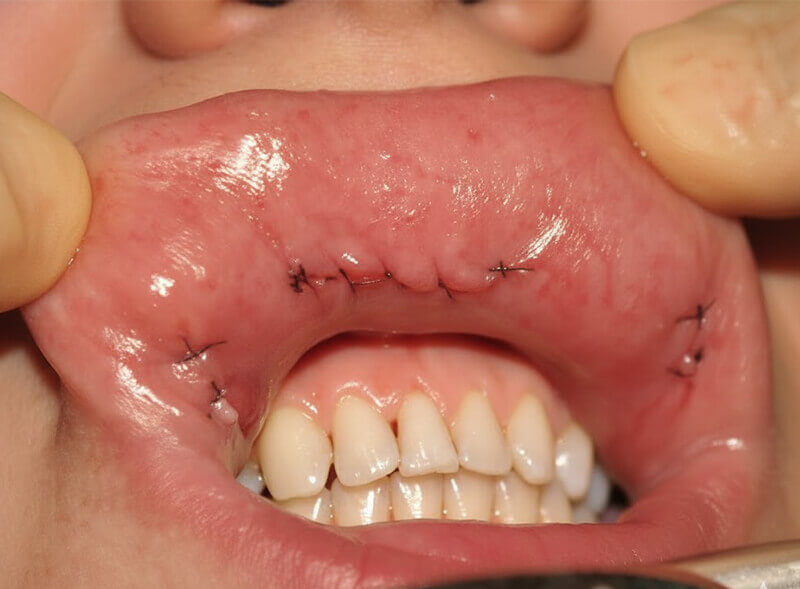
Three small entry points are created in the vestibule of the lower lip. Through these access sites, the surgeon develops a working space and advances towards the thyroid gland without opening the skin of the neck.
How the procedure is performed
Three trocars (one 10 mm and two 5 mm) are inserted through the lower lip. A high-definition camera and long, fine endoscopic instruments are introduced through these ports. The thyroid gland is then carefully dissected under magnified vision while protecting the recurrent laryngeal nerves and parathyroid glands, supported by intraoperative neuromonitoring.
Cosmetic result and healing
Because the incisions are made inside the mouth, there is no visible neck scar. Initially, small sutures are present in the inner lower lip, but these heal quickly and the mucosa gradually returns to a natural appearance. From the outside, the neck usually looks unchanged, which is a key advantage of TOETVA for many patients.
As part of pre-operative preparation for TOETVA, a dental assessment is recommended to exclude any infection in the oral cavity.
TOETVA in pictures


Risks and recovery
Possible complications
Overall, complications occur in around 5 % of patients. The most common are temporary hoarseness due to nerve irritation and short-term changes in calcium levels, which are usually managed with medication and resolve within a few weeks.
More serious problems, such as permanent nerve damage, significant bleeding, or wound infection, are rare but are discussed in detail with each patient before surgery.
Hospital stay
Most patients stay in hospital for about two days. A small drain, if used, is usually removed on the second day. Stitches in the skin are generally removed around the fourth postoperative day, or they may be absorbable depending on the technique used.
Long-term follow-up
After removal of part or all of the thyroid, lifelong levothyroxine is normally required. TSH levels are checked regularly, often every six months, to adjust the dose. Oncology patients require structured follow-up and imaging to monitor for recurrence.
Possible complications
Overall, complications occur in around 5 % of patients. The most common are temporary hoarseness due to nerve irritation and short-term changes in calcium levels, which are usually managed with medication and resolve within a few weeks.
More serious problems, such as permanent nerve damage, significant bleeding, or wound infection, are rare but are discussed in detail with each patient before surgery.
Hospital stay
Most patients stay in hospital for about two days. A small drain, if used, is usually removed on the second day. Stitches in the skin are generally removed around the fourth postoperative day, or they may be absorbable depending on the technique used.
Long-term follow-up
After removal of part or all of the thyroid, lifelong levothyroxine is normally required. TSH levels are checked regularly, often every six months, to adjust the dose. Oncology patients require structured follow-up and imaging to monitor for recurrence.
Disclaimer
*The Pax Medicus website provides information for guidance only and does not constitute medical advice, diagnosis, or treatment. Pax Medicus does not provide healthcare services and is not a substitute for consultation with a qualified medical professional. Always seek advice from your physician regarding any medical condition. Prices shown are indicative only and subject to confirmation by the healthcare provider. This is the official website of Pax Medicus; we do not operate through agents or third-party sites.
BOOK YOUR CONSULTATION TODAY
Simply fill in the form below and our team will get back to you as soon as possible.