


Thyroid Diagnostics
We offer a full range of diagnostic tests to assess the structure and function of the thyroid gland. These include laboratory tests, thyroid ultrasound examinations for children and adults, and fine-needle aspiration biopsy (FNAB) of thyroid nodules. These diagnostic methods help identify hormonal disorders, autoimmune thyroid conditions, thyroid nodules, and signs of malignancy.
Laboratory Tests
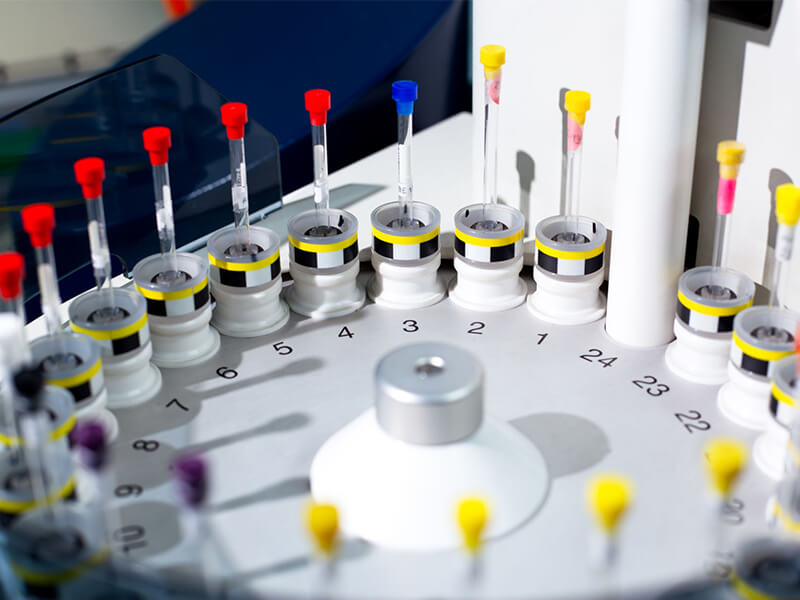
Laboratory tests are performed to measure hormone levels such as TSH (thyroid-stimulating hormone) and free thyroid hormones fT3 and fT4. These tests help assess whether the thyroid is functioning normally.
We also carry out testing for key autoantibodies, including anti-TG (antibodies against thyroglobulin), anti-TPO (antibodies against thyroid peroxidase) and anti-TSHR (antibodies against the TSH receptor). These results help diagnose autoimmune thyroid diseases such as Hashimoto’s thyroiditis and Graves’ disease.
Thyroid Ultrasound (USG)
Thyroid ultrasound is a fundamental diagnostic tool. It is non-invasive, painless, and safe for all patients, including pregnant women. No preparation is required, and it can be performed at any time of day.
The examination allows assessment of the size and structure of the thyroid and parathyroid glands, detection of inflammation such as chronic autoimmune thyroiditis, and identification of thyroid nodules. Ultrasound also helps determine the size, shape, location and echogenicity of any nodules, as well as evaluate cervical lymph nodes.
How the examination is performed
The doctor applies a small amount of gel to the neck and moves an ultrasound probe to visualise the thyroid. The patient lies on their back with their head slightly extended. The scan evaluates thyroid position, volume, echogenicity, vascularisation, and any suspicious nodules.
When ultrasound is recommended
• Abnormal TSH, T3 or T4 results • Enlarged neck circumference • Palpable thyroid nodules • Monitoring benign nodules or multinodular goitre • Follow-up after thyroid surgery • Family history of thyroid cancer • Occupational radiation exposure
Fine-Needle Aspiration Biopsy (FNAB)
FNAB is used to obtain a tissue sample from a thyroid nodule for histopathological examination. It is performed under ultrasound guidance to ensure precise collection.
When FNAB is needed
Patients qualify for biopsy if they have nodules larger than 1 cm, or smaller nodules showing suspicious features. In multinodular goitre, the most concerning nodules are selected.
About the procedure
The procedure is quick (5–15 minutes), painless and does not require anaesthesia. Complications such as swelling or haematoma are rare.
Biopsy findings
Results are classified according to the Bethesda system, indicating whether a nodule is benign, malignant or indeterminate. If the result is unclear, a core-needle biopsy may be recommended.
Disclaimer
*The Pax Medicus website provides information for guidance only and does not constitute medical advice, diagnosis, or treatment. Pax Medicus does not provide healthcare services and is not a substitute for consultation with a qualified medical professional. Always seek advice from your physician regarding any medical condition. Prices shown are indicative only and subject to confirmation by the healthcare provider. This is the official website of Pax Medicus; we do not operate through agents or third-party sites.
BOOK YOUR CONSULTATION TODAY
Simply fill in the form below and our team will get back to you as soon as possible.