


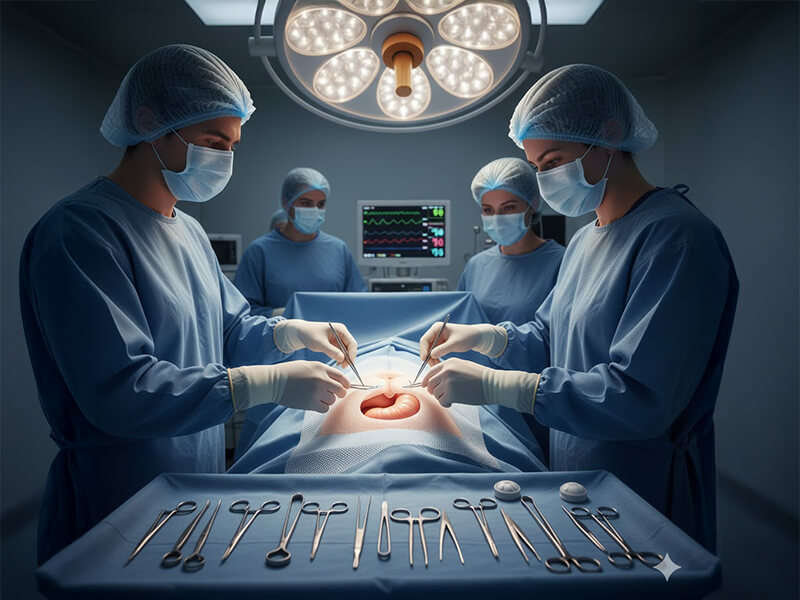
Hiatal Hernia Treatment
A hiatal hernia is a gastrointestinal condition in which part of the stomach moves through the oesophageal hiatus of the diaphragm into the chest. This happens when the diaphragm, which normally acts as a natural barrier between the chest and abdominal cavities, does not function properly.
Hiatal hernias are a common cause of gastro-oesophageal reflux disease (GERD), leading to symptoms such as heartburn, chest pain and difficulty swallowing. PAX MEDICUS medical tourism agency helps patients access specialist diagnostics and modern surgical treatment for hiatal hernia, including minimally invasive and robotic options, at trusted partner hospitals abroad.
What Is a Hiatal Hernia?
A hiatal hernia occurs when part of the stomach moves from the abdominal cavity into the chest through the oesophageal hiatus, an opening in the diaphragm. The diaphragm normally separates the chest and the abdomen and acts as a barrier to reflux of stomach contents into the oesophagus.
Sliding Hiatal Hernia
The most common type of hiatal hernia is the sliding hernia, diagnosed in around 90% of patients. In sliding hernias, the upper part of the stomach and its cardia (where the oesophagus meets the stomach) are displaced into the chest. Typical symptoms include upper abdominal and chest pain, regurgitation of stomach contents into the oesophagus, heartburn, vomiting, coughing, hoarseness and difficulty swallowing.
Paraoesophageal Hiatal Hernia
The second type is the paraoesophageal hernia, where the cardia and a significant part, or almost the entire stomach, move into the chest. Paraoesophageal hernias may be asymptomatic. When symptoms do appear, patients often report shortness of breath and an increased heart rate, especially after meals or when lying down.
What Are the Causes of a Hiatal Hernia?
Hiatal hernias are more frequently diagnosed in women than in men, largely due to increased intra-abdominal pressure during pregnancy and childbirth, which can weaken the diaphragm and surrounding tissues.
Other risk factors that may contribute to the development of a hiatal hernia include:
Lifestyle & Physical Factors
Medical & Structural Factors
What Are the Symptoms of a Hiatal Hernia?
Symptoms vary depending on the size and type of hernia, and may resemble those of gastro-oesophageal reflux disease (GERD).
Digestive & Reflux Symptoms
Respiratory & General Symptoms
How Is a Hiatal Hernia Diagnosed?
The primary diagnostic test for hiatal hernia is gastroscopy. This allows direct examination of the lower oesophagus, the junction between the oesophagus and the stomach, and the upper part of the stomach. Gastroscopy can detect ulcers, inflammation of the gastric or oesophageal mucosa and complications such as Barrett’s oesophagus.
During gastroscopy, tissue samples can be taken for histopathological examination and for testing for Helicobacter pylori.
Additional diagnostic tests may include:
How Is a Hiatal Hernia Treated?
Treatment depends on the type and severity of the hernia and the extent of symptoms and complications. Many patients are initially managed with medication and lifestyle changes.
Pharmacological Treatment
First-line therapy usually includes medicines that reduce stomach acid secretion and improve gastrointestinal motility.
Diet & Lifestyle Changes
Dietary recommendations are similar to those for gastro-oesophageal reflux disease (GERD) and may include:
If pharmacological and lifestyle treatment is ineffective, or if the hiatal hernia is advanced, associated with complications, or linked to congenital defects of the oesophageal hiatus, surgical intervention may be necessary. Hiatal hernias are the most common cause of GERD. In some patients, chronic reflux can lead to oesophagitis and Barrett’s oesophagus, a condition involving changes in the lining of the oesophagus that may, in some cases, progress to oesophageal cancer.
What Does Robotic Hiatal Hernia Surgery Involve?
Hiatal hernia surgery can be carried out using open (classical) surgery or minimally invasive methods such as laparoscopy or robotic surgery. The aim is to relieve symptoms, restore normal anatomy and prevent complications such as ulcers, oesophagitis and Barrett’s oesophagus. Robotic hiatal hernia surgery is performed under general anaesthesia through several small incisions in the abdominal wall. Through these incisions, the surgeon inserts miniature surgical instruments and a camera.
How the Procedure Is Performed
Once the instruments are positioned near the hernia, the surgeon:
Benefits of Robotic & Minimally Invasive Techniques
Robotic systems provide significant magnification and improved visualisation of the surgical field, enabling better identification of nerves and blood vessels and very precise suturing.
What Is the Cost of Hiatal Hernia Surgery?
The cost of hiatal hernia repair depends on several factors, including:
All details of the procedure, treatment options, and estimated costs are discussed with the patient and the treating surgeon during the preoperative consultation.
Disclaimer
*The Pax Medicus website provides information for guidance only and does not constitute medical advice, diagnosis, or treatment. Pax Medicus does not provide healthcare services and is not a substitute for consultation with a qualified medical professional. Always seek advice from your physician regarding any medical condition. Prices shown are indicative only and subject to confirmation by the healthcare provider. This is the official website of Pax Medicus; we do not operate through agents or third-party sites.
BOOK YOUR CONSULTATION TODAY
Simply fill in the form below and our team will get back to you as soon as possible.