


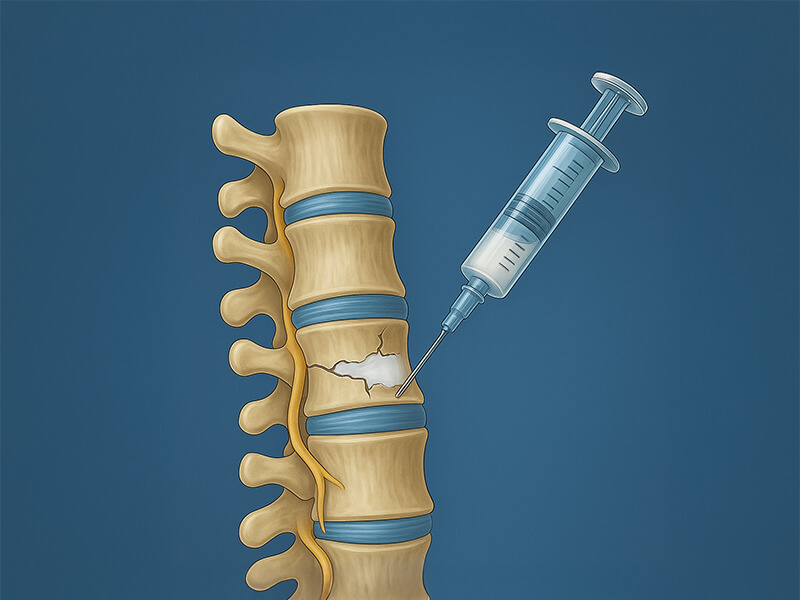
Vertebroplasty
Pax Medicus connects you with experienced spinal specialists offering modern, minimally invasive treatment for vertebral compression fractures. Our goal is to relieve pain, stabilise the spine, and restore your comfort and mobility as quickly as possible.
Understanding the Structure and Function of the Spine
The human spine is composed of 24 vertebrae and two bones formed by the fusion of vertebrae: the sacrum and the coccyx (totalling 26 bones). It is divided into five regions: cervical, thoracic, lumbar, sacral and coccygeal. Each vertebra consists of two main parts- the vertebral body and the vertebral arch- along with projections called processes. Between the body and the arch lies the vertebral foramen. The vertebral foramina of successive vertebrae form the spinal canal, which houses the spinal cord. Nerve roots branch off from the spinal cord and exit the canal through the intervertebral foramina
The vertebral processes serve as attachment points for muscles and ligaments, allowing articulation with other vertebrae and forming intervertebral joints. Between the vertebrae lie the intervertebral discs. These joints and discs are essential for the proper functioning of the spine and the body as a whole, maintaining posture, enabling movement of the torso and neck, and absorbing impact to reduce stress on the vertebrae.
The spine has both a supportive and protective role- maintaining an upright posture while protecting one of the body’s most vital structures: the spinal cord and its nerve roots.
What is a Compression Fracture of a Vertebra?
A vertebral compression fracture, often associated with osteoporosis, occurs when the bone collapses under a level of stress that would not normally cause a fracture. These fractures are common complications of osteoporosis- a condition where bones lose strength and density, becoming more fragile and susceptible to breaking. This reduction in bone mineral density leads to weakened bone structure and a greater risk of compression fractures.
What is Vertebroplasty?
Vertebroplasty is a minimally invasive procedure used to treat painful vertebral compression fractures. During the procedure, a special orthopaedic cement is injected into the affected vertebra to stabilise the fracture and relieve pain.
What is the Purpose of Vertebroplasty?
After a vertebral fracture, loose bone fragments may rub against each other or move into the spinal canal or intervertebral foramina, compressing the spinal cord or nerve roots. This causes pain and instability. The bone cement used in vertebroplasty helps fuse and stabilise these fragments, restoring structural integrity and reducing pain.
When is Vertebroplasty Recommended?
Vertebroplasty is recommended when non-invasive treatments fail to relieve pain. Conservative management for vertebral compression fractures typically includes rest, pain relief medication, and the use of a custom-fitted orthopaedic brace.
An orthopaedic brace stabilises the spine and limits movement of the fractured vertebra, helping to reduce pain and promote healing. However, if pain persists despite these measures, vertebroplasty may be advised.
What Happens During the Vertebroplasty Procedure?
To perform vertebroplasty, the surgeon uses a special syringe with a hollow needle, orthopaedic cement, and a fluoroscope- an X-ray device that produces real-time moving images.
The patient lies face down on the operating table and is connected to monitors tracking vital signs such as blood pressure, heart rate, breathing, and oxygen levels. The procedure is carried out under local anaesthetic, injected into the area to prevent pain.
Once the anaesthetic takes effect, the surgeon makes a small skin incision to allow the needle to pass through the skin, subcutaneous tissue, and muscles. Using fluoroscopic guidance, the needle is advanced into the affected vertebra. Once correctly positioned, orthopaedic cement is carefully injected into the vertebral body.
The cement is initially in liquid form but solidifies within minutes, achieving a hardness comparable to that of healthy bone. The needle is then removed, and the small incision is covered with a sterile dressing- sutures are not required.
Anaesthetic
Local anaesthetic
Incision
Small puncture (~0.5 cm)
Procedure Duration
Approximately 30–60 minutes
Your journey step by step
History, examination & imaging review
Blood tests & local anaesthetic planning
Minimally invasive vertebroplasty
Observation & early mobilisation
Pain review, healing check & osteoporosis management
Pain review, healing check & osteoporosis management
Recovery After Vertebroplasty
Vertebroplasty is a minimally invasive procedure, involving minimal disruption to the surrounding tissues. Most patients are able to leave hospital the same day.
To reduce the risk of further compression fractures, your clinician may recommend treatment for osteoporosis. This typically involves medication to improve bone strength and density. The decision to start such treatment depends on your overall health, test results, and the underlying cause of bone weakness.
Disclaimer
*The Pax Medicus website provides information for guidance only and does not constitute medical advice, diagnosis, or treatment. Pax Medicus does not provide healthcare services and is not a substitute for consultation with a qualified medical professional. Always seek advice from your physician regarding any medical condition. Prices shown are indicative only and subject to confirmation by the healthcare provider. This is the official website of Pax Medicus; we do not operate through agents or third-party sites.
BOOK YOUR CONSULTATION TODAY
Simply fill in the form below and our team will get back to you as soon as possible.