


Spinal Stenosis Surgery (Laminectomy)
Pax Medicus connects you with trusted spinal specialists who provide modern, evidence-based treatment for spinal stenosis. Our aim is to relieve pressure on the nerves, reduce pain, and help you return to your everyday activities with confidence.
Understanding the Structure and Function of the Spine
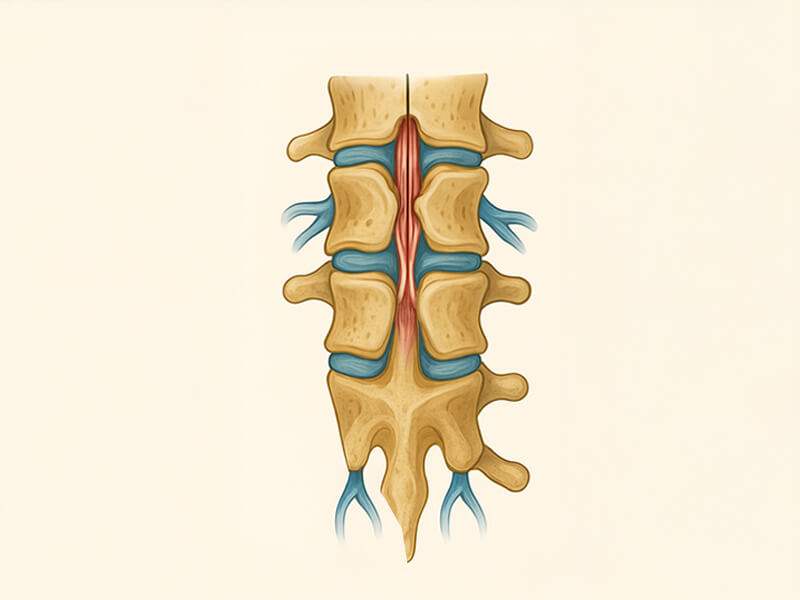
The human spine consists of 24 movable vertebrae and two fused bones – the sacrum and coccyx – making 26 bones in total. It is divided into five regions: cervical, thoracic, lumbar, sacral and coccygeal. Each vertebra has a body and an arch, which together form a canal that houses and protects the spinal cord. Nerve roots branch out from the cord and pass through small openings called intervertebral foramina.
Muscles and ligaments attach to the vertebral processes, providing stability and enabling movement. Between each vertebra sits an intervertebral disc that acts as a cushion, absorbing impact and maintaining flexibility. Altogether, the spine supports the body, protects the spinal cord, and allows smooth, controlled movement.
What is Spinal Stenosis?
Spinal stenosis is a narrowing of the spinal canal or the gaps between the vertebrae, which can compress the spinal cord and surrounding nerves.
How Does Spinal Stenosis Develop?
Spinal stenosis often develops gradually as part of the ageing process. Over time, the intervertebral discs lose water content and elasticity, causing them to flatten and lose height. This brings the vertebrae closer together and narrows the pathways where the nerves travel.
In response, small bony growths known as osteophytes may form, and the surrounding ligaments (particularly the ligamentum flavum) can thicken. These changes can further restrict space within the spinal canal and increase pressure on the nerves, leading to pain, numbness, or weakness.
Common Symptoms of Spinal Stenosis
When is Surgery Recommended?
Surgery is usually considered when non-surgical treatments such as physiotherapy, prescribed medication, or targeted injections no longer provide sufficient relief, or when nerve compression causes worsening weakness or loss of function.
What Happens During Spinal Stenosis Surgery?
The standard operation for spinal stenosis is called a laminectomy (decompression). Under general anaesthetic, the surgeon makes a small incision (around 4–8 cm) over the affected area. The muscles are gently moved aside, and part of the bone or thickened ligament pressing on the nerves is carefully removed to create more space.
The wound is then closed in layers using dissolvable stitches or skin clips. Surgery typically takes between one and three hours, depending on how many spinal levels are treated.
Incision
Approx. 4–8 cm (posterior midline)
Procedure duration
1–3 hours
Anaesthesia
General anaesthetic
Your journey step by step
Medical history, examination and imaging review
Blood tests, ECG and anaesthetic assessment
Laminectomy decompression
Mobilisation and ward physiotherapy
Wound check, rehabilitation and ongoing support
Wound check, rehabilitation and ongoing support
Recovery After Laminectomy
Most patients are ready to leave hospital within 2–5 days. Before discharge, a physiotherapist will guide you on how to move safely and care for your back as it heals.
Disclaimer
*The Pax Medicus website provides information for guidance only and does not constitute medical advice, diagnosis, or treatment. Pax Medicus does not provide healthcare services and is not a substitute for consultation with a qualified medical professional. Always seek advice from your physician regarding any medical condition. Prices shown are indicative only and subject to confirmation by the healthcare provider. This is the official website of Pax Medicus; we do not operate through agents or third-party sites.
BOOK YOUR CONSULTATION TODAY
Simply fill in the form below and our team will get back to you as soon as possible.