


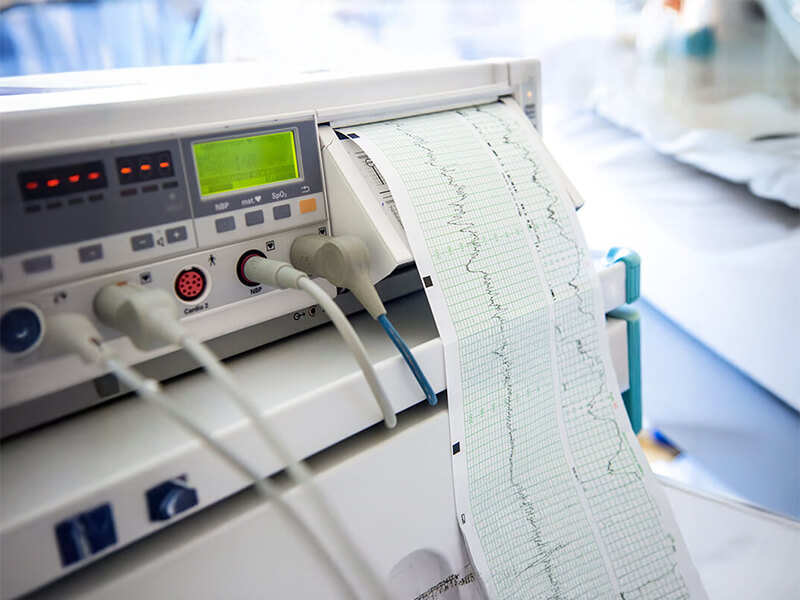
Cardiotocography (CTG)
Safe monitoring of foetal heart rate and uterine contractions, supporting early detection of foetal distress and ensuring the best possible prenatal care.
Diagnostic tests can also be performed preventively to provide peace of mind, even when no symptoms are present.
CTG, or cardiotocography, is one of the basic examinations in obstetrics, used to assess the condition of the foetus in the final weeks of pregnancy and during labour. It allows for the early detection of foetal distress and is used as part of intensive prenatal care. The examination monitors the foetal heart rate and uterine contractions. It is typically performed from the 25th week of pregnancy onwards, with the first examination usually scheduled around the expected due date.
Benefits
Provides reassurance without risk to mother or baby.
Helps doctors assess foetal well-being during contractions.
Ensures timely medical intervention if required.
How to Prepare
No special preparation is usually required for CTG. Patients may be asked to lie comfortably in a semi-reclined position during the test while sensors are placed on the abdomen to record the baby’s heartbeat and uterine contractions.
Disclaimer
*The Pax Medicus website provides information for guidance only and does not constitute medical advice, diagnosis, or treatment. Pax Medicus does not provide healthcare services and is not a substitute for consultation with a qualified medical professional. Always seek advice from your physician regarding any medical condition. Prices shown are indicative only and subject to confirmation by the healthcare provider. This is the official website of Pax Medicus; we do not operate through agents or third-party sites.
BOOK YOUR CONSULTATION TODAY
Simply fill in the form below and our team will get back to you as soon as possible.