


Colonoscopy
Colonoscopy is the most effective diagnostic and preventive test for assessing the condition of the large intestine and preventing colorectal cancer. The procedure allows direct visualisation of the intestinal walls and enables biopsies of suspicious changes.
Diagnostic tests can also be performed preventively to provide peace of mind, even when no symptoms are present.
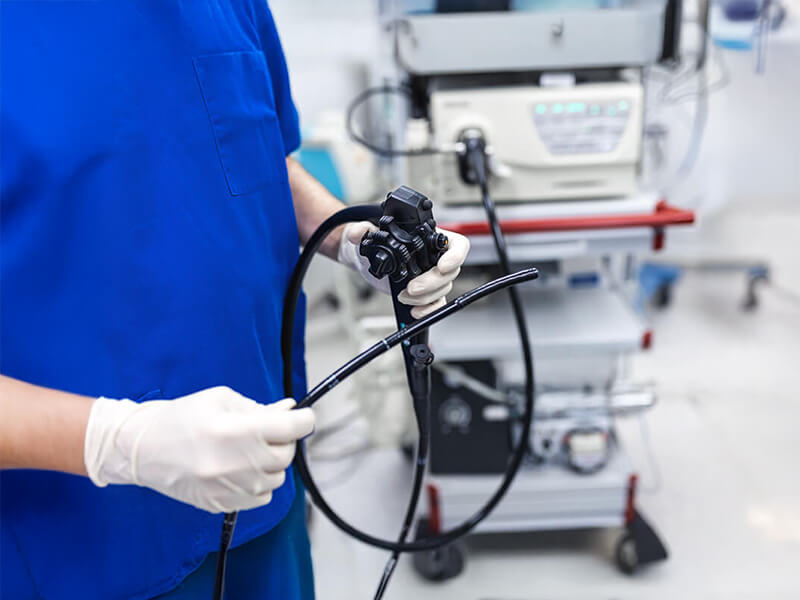
Colonoscopy is currently the most effective and efficient endoscopic examination of the lower gastrointestinal tract, used in the prevention of colorectal cancer. The procedure involves inserting an endoscope, a flexible tube about the thickness of an index finger and 130 to 200 cm in length, into the large intestine via the rectum. The endoscope is equipped with a camera, and the images it captures are displayed on a monitor, allowing the doctor to assess the condition of the intestinal walls and take biopsies of any visible abnormalities for histopathological analysis.
The procedure is performed under local anaesthesia or general sedation (analgosedation), which not only ensures patient comfort but also improves working conditions for the medical team. A colonoscopy typically takes around 30 minutes. Patients who undergo the procedure under local anaesthesia can return home immediately, while those who receive sedation are advised to rest for three hours and avoid driving during this time. After the examination, patients may experience bloating and cramping due to the introduction of air into the intestine during the procedure. These symptoms are temporary and resolve naturally as the excess air is expelled
Indications
The procedure is recommended for patients with symptoms suggestive of lower gastrointestinal tract disorders, such as:
Colonoscopy is also a preventive screening tool for colorectal cancer, recommended for:
How to Prepare
Proper preparation is essential for a fusion biopsy:
Disclaimer
*The Pax Medicus website provides information for guidance only and does not constitute medical advice, diagnosis, or treatment. Pax Medicus does not provide healthcare services and is not a substitute for consultation with a qualified medical professional. Always seek advice from your physician regarding any medical condition. Prices shown are indicative only and subject to confirmation by the healthcare provider. This is the official website of Pax Medicus; we do not operate through agents or third-party sites.
BOOK YOUR CONSULTATION TODAY
Simply fill in the form below and our team will get back to you as soon as possible.