


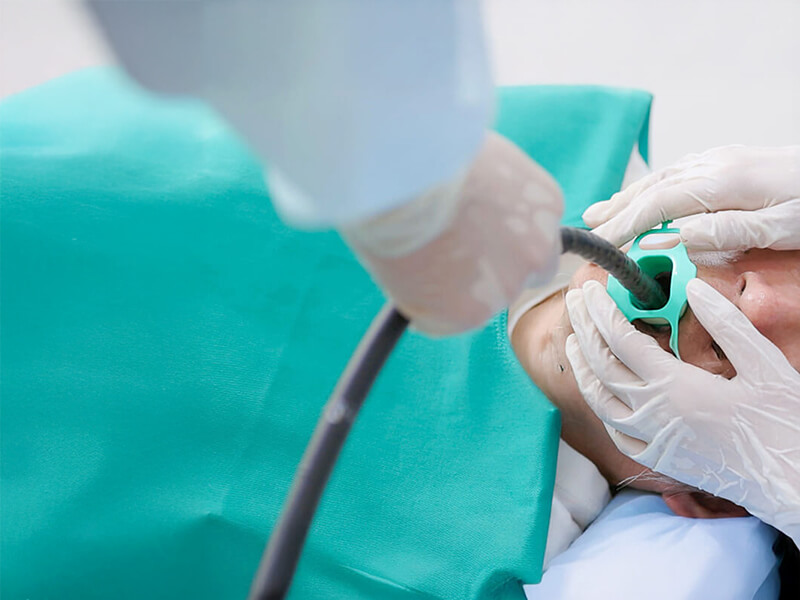
Gastroscopy
A safe and effective diagnostic procedure to examine the oesophagus, stomach, and duodenum, helping detect gastrointestinal conditions at an early stage.
Diagnostic tests can also be performed preventively to provide peace of mind, even when no symptoms are present.
Gastroscopy is a diagnostic procedure used to examine the upper gastrointestinal tract, allowing the doctor to assess the condition of the oesophagus, stomach, the duodenal bulb, and the descending part of the duodenum.
The procedure involves inserting a gastroscope, a flexible tube equipped with a light source and forceps, into the oesophagus. The forceps enable the collection of tissue samples for histopathological examination if necessary. Gastroscopy allows the doctor to visualise and record images from inside the patient’s body.
The procedure typically lasts between 10 and 30 minutes. Prior to the examination, the patient’s throat is numbed with a local anaesthetic, or the procedure is performed under general anaesthesia with the assistance of an anaesthetist, making it more comfortable for the patient. After the gastroscopy, it is advised to avoid eating and drinking for a certain period of time, as the irritated throat and oesophagus may cause discomfort. Following the procedure, patients may experience bloating or belching due to the introduction of air into the digestive tract. These symptoms are usually short-lived and resolve naturally.
The results of the examination are typically available within about two weeks, although the result for Helicobacter pylori is known within minutes of completing the procedure.
Indications
The procedure is recommended for patients experiencing symptoms suggestive of upper gastrointestinal tract disorders, such as:
Benefits
Helps identify gastrointestinal conditions at an early stage.
Allows biopsies for histopathological analysis.
Usually completed within 10–30 minutes.
How to Prepare
Preparation for the procedure includes the following steps:
Disclaimer
*The Pax Medicus website provides information for guidance only and does not constitute medical advice, diagnosis, or treatment. Pax Medicus does not provide healthcare services and is not a substitute for consultation with a qualified medical professional. Always seek advice from your physician regarding any medical condition. Prices shown are indicative only and subject to confirmation by the healthcare provider. This is the official website of Pax Medicus; we do not operate through agents or third-party sites.
BOOK YOUR CONSULTATION TODAY
Simply fill in the form below and our team will get back to you as soon as possible.