
Hallux Valgus Surgery (Bunion Surgery) | PAX Medicus Medical Tourism UK

Hallux Valgus Surgery (Bunion Surgery)

Bunions (hallux valgus) cause pain, visible deformity of the big toe and difficulty wearing normal footwear. Over time they can seriously affect walking comfort and everyday activity.

As a medical tourism agency, we coordinate specialist bunion surgery and rehabilitation with trusted orthopaedic centres abroad for patients from the UK.

What Are Bunions (Hallux Valgus)?

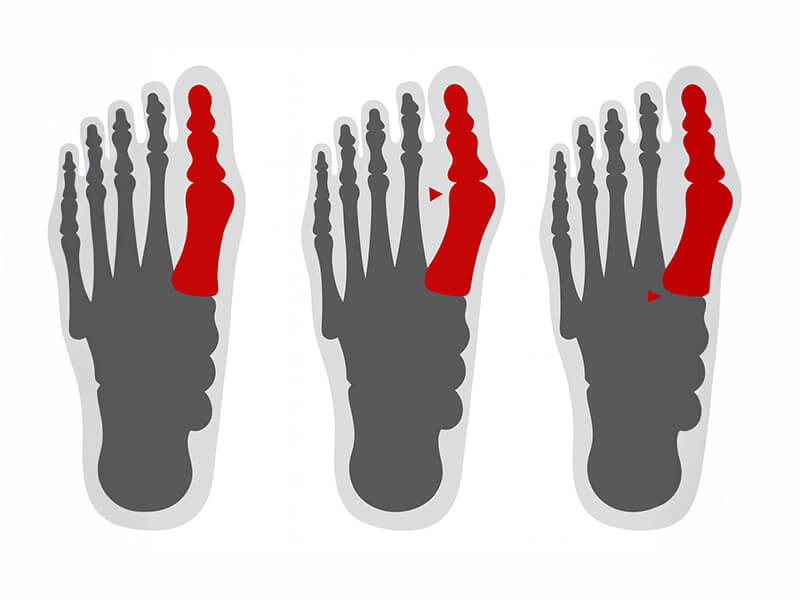
Bunions are a degenerative condition also known as hallux valgus. The big toe gradually deviates sideways towards the second toe. A slight deviation of up to around 15° from the neutral axis is usually not a concern, but when the big toe rotates, overlaps or slips underneath the second toe, the deformity becomes problematic and is clearly visible.

Symptoms of Bunions

Bunions do not appear overnight. The deformity develops slowly, and symptoms tend to worsen over time.

Early symptoms

  • No or minimal discomfort initially.
  • Mild change in big toe position.
  • Occasional redness after long periods on your feet.
  • Increased pressure in narrow or tight shoes.

Progressive symptoms

  • Persistent pain at the big toe joint.
  • Redness, swelling and tenderness over the bunion.
  • Difficulty walking and putting on shoes.
  • Biomechanical disturbance of the foot due to altered weight-bearing.

What Causes Bunions?

While high-heeled shoes are often blamed, the causes of bunions are usually multifactorial.

Internal factors

  • Genetic predisposition – bunions running in the family.
  • Specific structure and laxity of ligaments and tendons in the foot.
  • Transverse flatfoot commonly associated with hallux valgus.
  • Degenerative joint changes progressing with age and joint wear.

External factors

  • Ill-fitting shoes, especially narrow forefoot or high-heeled footwear.
  • Prolonged standing work without adequate rest or foot support.
  • Excess body weight increasing load on the feet.
  • Pregnancy – hormonal changes and weight gain leading to joint relaxation.

In early stages, bunion symptoms may be managed conservatively to slow progression and improve comfort.

Preventive measures

  • Choosing shoes with a wide toe box and flat heels.
  • Taking regular breaks if you stand for long periods.
  • Performing simple foot and toe exercises.
  • Maintaining a healthy body weight.

Conservative management

  • Orthopaedic insoles and corrective foot supports.
  • Toe spacers or orthotic devices to realign the big toe.
  • Protective gel pads applied directly over the bunion to reduce friction.
  • Physiotherapy and short courses of NSAIDs to reduce inflammation and pain.

Conservative treatment can relieve symptoms and delay progression, but it cannot fully reverse advanced deformity. Surgical correction may eventually be recommended.

Surgery is considered when degenerative changes are advanced, joint movement is significantly restricted, or pain persists despite conservative care.

When surgery is recommended

  • Severe deformity affecting walking and footwear choice.
  • Chronic pain around the big toe joint.
  • Failure of orthotics, footwear changes and physiotherapy.
  • Cosmetic concerns combined with functional limitation in active patients.

Types of procedures

  • Soft-tissue procedures – correcting tendon and capsule imbalance around the joint.
  • Distal metatarsal osteotomy or wedge osteotomy to realign the bone structure.
  • Resection of the metatarsal head, more common in older patients with advanced degeneration.
  • In severe cases, use of endoprostheses (artificial joints) for the big toe.

Modern orthopaedics offers a wide range of surgical techniques. The choice of method is individual and depends on the patient’s age, overall health, degree of deformity and expectations regarding function and cosmetic appearance.

How Are Bunions Diagnosed?

Clinical assessment

  • Visual inspection of big toe and forefoot alignment.
  • Assessment of the foot arch and overall posture.
  • Palpation of sesamoid bones, bursa and surrounding soft tissues for tenderness.
  • Evaluation of joint mobility and functional limitations.

Imaging

  • X-rays taken in lateral and top-down (dorsoplantar) projections to assess deformity angles.
  • Evaluation of joint degeneration and damage to surrounding structures.
  • Imaging findings help guide the decision on whether surgery is indicated.

Recovery After Hallux Valgus Surgery

Immediately after surgery

  • Most patients can bear weight on the operated foot within hours.
  • A special postoperative shoe or immobilisation device may be required.
  • Pain and swelling are controlled with prescribed medication and elevation of the leg.
  • The first follow-up visit usually takes place around two weeks after surgery.

Rehabilitation and long-term outcome

  • Typical recovery period is around six weeks, with structured rehabilitation.
  • Physiotherapy focuses on restoring joint mobility and normal walking pattern.
  • Recurrence is rare when the technique is well chosen and post-op advice is followed.
  • High heels may be worn occasionally after recovery, but not as daily footwear.

Disclaimer
*The Pax Medicus website provides information for guidance only and does not constitute medical advice, diagnosis, or treatment. Pax Medicus does not provide healthcare services and is not a substitute for consultation with a qualified medical professional. Always seek advice from your physician regarding any medical condition. Prices shown are indicative only and subject to confirmation by the healthcare provider. This is the official website of Pax Medicus; we do not operate through agents or third-party sites.

BOOK YOUR CONSULTATION TODAY


Simply fill in the form below and our team will get back to you as soon as possible.