


Hand Surgery in Rheumatoid Arthritis (RA)
Rheumatoid Arthritis (RA) is a chronic autoimmune disease that affects joints throughout the body. When it involves the hands, it can lead to pain, stiffness, tendon damage and progressive deformities that affect daily function. Hand surgery is used to restore comfort, mobility and independence.
What is Rheumatoid Arthritis (RA)?
Rheumatoid Arthritis (RA) is a systemic connective tissue disease that is chronic, inflammatory and progressive. It is classified as an autoimmune disorder, meaning that the immune system mistakenly attacks the body’s own cells, treating them as foreign. The exact cause is not fully known, but RA is believed to be multifactorial.
A family history increases risk, with identical twins showing up to a 50% likelihood of both developing RA. Possible triggers include viral or bacterial infections, significant stress, and smoking. RA is more common in women and usually begins after the age of 35.
General symptoms
Joint-specific symptoms
RA also affects the entire body, increasing the risk of cardiovascular disease, vasculitis, osteoporosis, pneumonia, kidney dysfunction and Sjögren’s syndrome (dry eyes described as “grit under the eyelids”).
How is RA treated non-surgically?
RA management requires a coordinated, multidisciplinary approach. A rheumatologist manages medications, while physiotherapy and lifestyle adjustments are essential for maintaining mobility and reducing pain.
Medication
Lifestyle & rehabilitation
Surgical treatment options
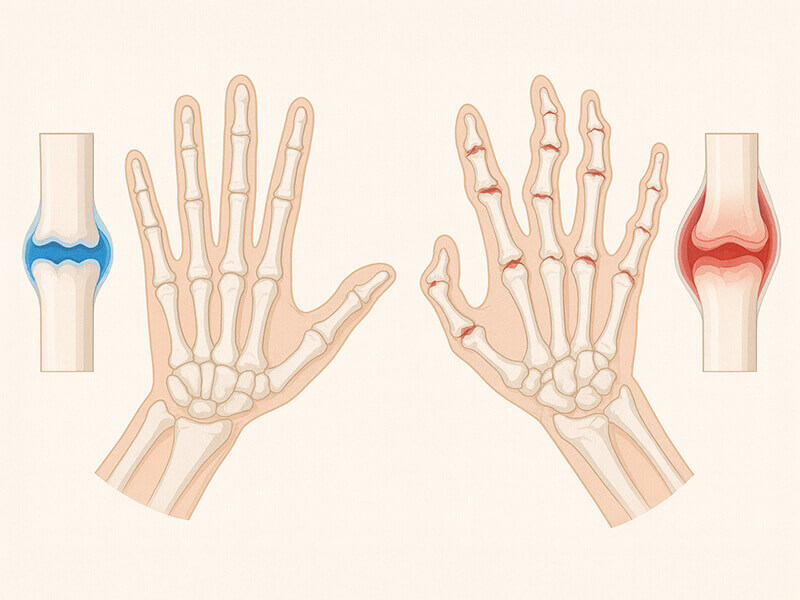
What is a rheumatoid hand?
A “rheumatoid hand” describes the deformities caused by RA. Progressive damage to the wrist and finger joints leads to reduced mobility, abnormal positioning, swelling and impaired hand function.
Common deformities
Why deformities occur
Recovery after RA hand surgery
Recovery depends on the complexity of surgery, the degree of joint damage and the patient’s overall health. Surgery is only one part of RA management — long-term success requires medication, physiotherapy and lifestyle adjustments.
Post-surgery expectations
Long-term care
Disclaimer
*The Pax Medicus website provides information for guidance only and does not constitute medical advice, diagnosis, or treatment. Pax Medicus does not provide healthcare services and is not a substitute for consultation with a qualified medical professional. Always seek advice from your physician regarding any medical condition. Prices shown are indicative only and subject to confirmation by the healthcare provider. This is the official website of Pax Medicus; we do not operate through agents or third-party sites.
BOOK YOUR CONSULTATION TODAY
Simply fill in the form below and our team will get back to you as soon as possible.