
Knee Arthroplasty (Knee Replacement Surgery) | PAX Medicus Medical Tourism UK

Knee Arthroplasty (Knee Replacement Surgery)

Knee arthroplasty, also known as knee replacement surgery, is one of the most effective treatments for advanced knee degeneration, providing long-lasting pain relief and restoring mobility.

Pax Medicus coordinates knee replacement procedures with trusted orthopaedic specialists abroad, ensuring high-quality diagnostics, surgery and rehabilitation planning.

What Is a Knee Prosthesis?

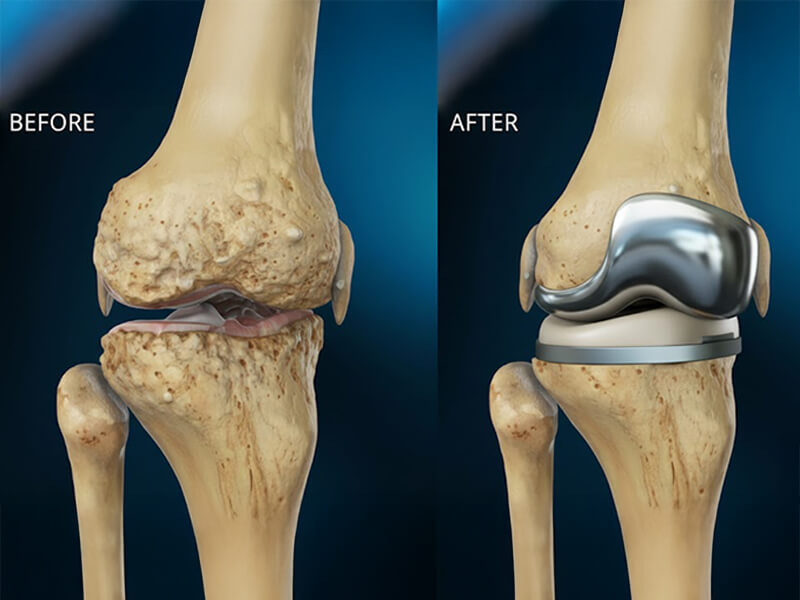
A knee prosthesis (endoprosthesis) is an artificial joint designed to replace the damaged components of the knee. Each implant is chosen to match the patient’s anatomy and functional needs.

  • Restores knee mobility and joint function.
  • Provides stability and corrects limb alignment.
  • Reduces or eliminates chronic knee pain.

Contraindications for Knee Replacement

Some conditions may prevent or delay knee arthroplasty:

  • Active infection around or inside the knee.
  • Severe neurological conditions affecting limb control.
  • Obesity or cardiovascular risk preventing safe anaesthesia.
  • Advanced osteoporosis.
  • Cancer and venous insufficiency (varicose veins).

Indications for Knee Arthroplasty

Surgery is recommended when pain, stiffness and joint deformity significantly limit daily activities and conservative treatments no longer help.

Degenerative causes

  • Primary osteoarthritis.
  • Secondary osteoarthritis.
  • Post-inflammatory degeneration.

Post-traumatic causes

  • Fractures with long-term complications.
  • nstability or deformity after injury.
  • Chronic pain unresponsive to rehabilitation.

Functional limitations

  • Severe movement restriction.
  • Difficulty walking or climbing stairs.
  • Reduced quality of life due to knee pain.

Types of Knee Endoprostheses

By fixation method

  • Cemented: secured with bone cement; common in older adults.
  • Cementless: implant integrates naturally with bone.

By stability (constraint)

  • Unconstrained.
  • Semi-constrained.
  • Hinged (fully constrained).

By extent of replacement

  • Total Knee Replacement (TKR): entire joint replaced.
  • Partial/Unicompartmental: only the damaged compartment replaced.

Knee replacement surgery normally takes 1–2 hours and is performed under spinal or general anaesthesia to ensure complete comfort.

  • An incision is made at the front of the knee.
  • Damaged cartilage and bone surfaces are removed.
  • A trial implant is positioned to assess movement and fit.
  • The final prosthesis is implanted once alignment is confirmed.
  • Drains may be used to remove excess blood.
  • The wound is sutured and dressed.

Although knee replacement surgery is highly successful, complications may occur in some cases:

  • Pain or swelling around the knee.
  • Deep vein thrombosis or pulmonary embolism.
  • Vascular injury or circulation problems.
  • Infection around the prosthesis.
  • Loosening or dislocation of the implant.
  • Allergic reaction to implant materials.
  • Nerve irritation or tissue injury.

Hospital stay usually lasts 5–7 days. Patients begin standing and walking the day after surgery, with physiotherapy starting immediately.

  • Early mobilisation and use of a specialised knee brace.
  • Intensive physiotherapy to restore full joint motion.
  • Gradual increase of weight-bearing on the operated limb.
  • Most patients walk without crutches within 6–12 weeks.

Disclaimer
*The Pax Medicus website provides information for guidance only and does not constitute medical advice, diagnosis, or treatment. Pax Medicus does not provide healthcare services and is not a substitute for consultation with a qualified medical professional. Always seek advice from your physician regarding any medical condition. Prices shown are indicative only and subject to confirmation by the healthcare provider. This is the official website of Pax Medicus; we do not operate through agents or third-party sites.

BOOK YOUR CONSULTATION TODAY


Simply fill in the form below and our team will get back to you as soon as possible.