


Shoulder Arthroscopy
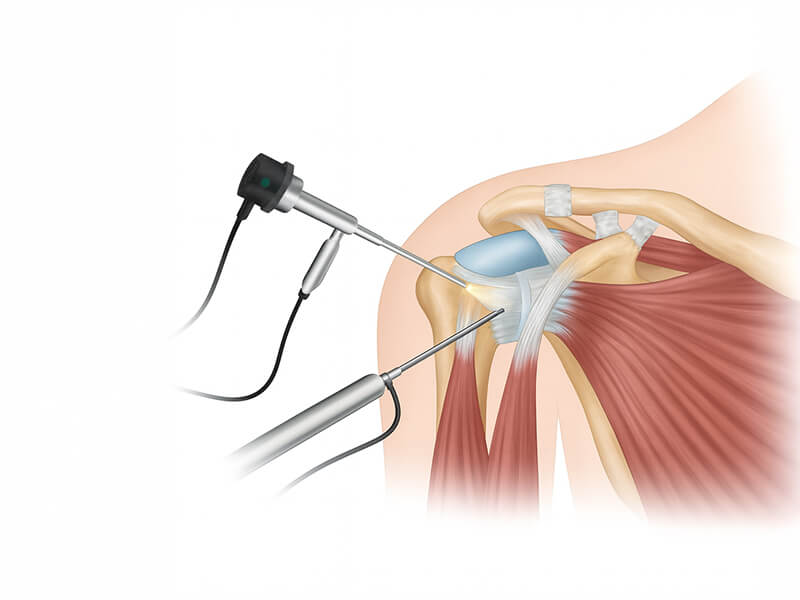
Shoulder arthroscopy is a minimally invasive technique that enables surgeons to examine, diagnose and treat various shoulder disorders using only a few small incisions. This modern approach allows accurate visualisation of the joint structures, including tendons, ligaments and cartilage, while minimising trauma to healthy tissue. As a medical tourism agency, we coordinate access to leading orthopaedic surgeons who specialise in arthroscopic procedures, offering patients advanced treatment options and streamlined care.
Indications for shoulder arthroscopy
Shoulder arthroscopy is used to treat patients who experience significant pain, restricted mobility or instability due to various conditions or injuries. It is also recommended for individuals with symptoms such as joint locking.
Common indications include:
Contraindications for shoulder arthroscopy
Shoulder arthroscopy is not recommended in certain situations, such as:
Possible complications of shoulder arthroscopy
Shoulder arthroscopy is associated with a relatively low risk of complications, but potential issues include:
Any concerning symptoms after surgery should be reported promptly to a doctor.
How is shoulder arthroscopy performed?
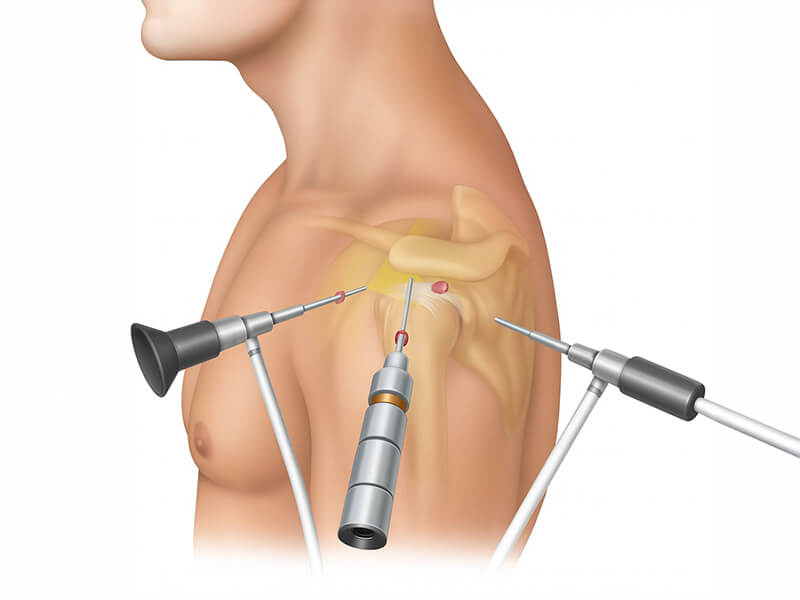
Shoulder arthroscopy is a minimally invasive technique involving small surgical incisions, typically no larger than 8 mm, with two or three entry points. The procedure usually lasts around two hours and is performed under general or regional anaesthesia.
The patient is positioned either semi-seated or side-lying on the healthy side, with the affected shoulder stabilised using a specialised traction system. Before the operation, the joint is filled with sterile saline solution. The surgeon then inserts an arthroscope (a small camera) through one of the incisions to visualise the joint, along with specialised instruments to treat the underlying condition.
Shoulder arthroscopy may be performed purely for diagnostic purposes, or as a therapeutic procedure to repair damaged structures. Surgical interventions can include smoothing deformed cartilage surfaces, removing hypertrophic synovial tissue or addressing structural damage such as tendon or labral te
Recovery after shoulder arthroscopy
Hospitalisation usually lasts up to three days, although the time required to return to daily activities depends on the extent of the surgery and the severity of the underlying condition. Full recovery of joint function typically takes between one and six months.
During the first one to two weeks, the operated shoulder must be immobilised using a special orthosis or sling. The patient’s sleeping position significantly affects recovery, so a semi-reclined or supported position is often recommended in the initial days after surgery.
Benefits of shoulder arthroscopy
Disclaimer
*The Pax Medicus website provides information for guidance only and does not constitute medical advice, diagnosis, or treatment. Pax Medicus does not provide healthcare services and is not a substitute for consultation with a qualified medical professional. Always seek advice from your physician regarding any medical condition. Prices shown are indicative only and subject to confirmation by the healthcare provider. This is the official website of Pax Medicus; we do not operate through agents or third-party sites.
BOOK YOUR CONSULTATION TODAY
Simply fill in the form below and our team will get back to you as soon as possible.