


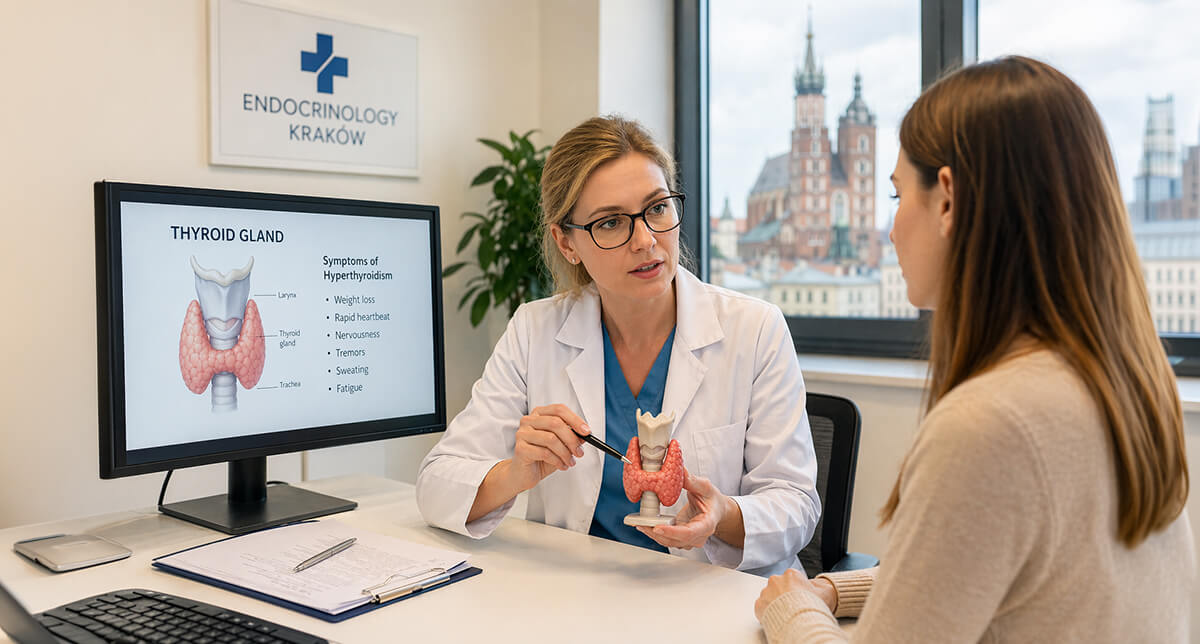
Overactive Thyroid (Hyperthyroidism) Treatment in Kraków, Poland – A Complete Guide for UK Patients
An overactive thyroid, also known as hyperthyroidism, is a condition in which the thyroid gland produces too much thyroid hormone. Excess levels of thyroxine (T4) and triiodothyronine (T3) can affect metabolism, heart function, body temperature and overall wellbeing. For UK patients considering specialist endocrine care abroad, Kraków, Poland offers access to structured diagnostics, personalised treatment planning and experienced thyroid specialists.
Early diagnosis is important, as untreated hyperthyroidism may lead to serious complications. With the right investigations and treatment plan, most patients can manage symptoms effectively and reduce long-term risks.
What Is Hyperthyroidism?
The thyroid is an endocrine gland located in the neck. It helps regulate metabolism, temperature control, heart rate, growth and development. Its function is influenced by thyroid-stimulating hormone (TSH), which is produced by the pituitary gland.
When the thyroid becomes overactive, it releases excessive amounts of T3 and T4 into the bloodstream. This speeds up many of the body’s functions and can lead to a wide range of symptoms, from weight loss and palpitations to anxiety and disturbed sleep.
Hyperthyroidism affects around 2% of the general population and is considerably more common in women. The condition can develop at almost any age and should not be ignored.
What Causes an Overactive Thyroid?
The causes of hyperthyroidism vary, and identifying the underlying reason is essential because it determines the most appropriate treatment approach. In iodine-sufficient areas, the most common cause is Graves’ disease, an autoimmune disorder that stimulates the thyroid to produce too much hormone.
In other patients, hyperthyroidism may be linked to thyroid disorders such as toxic nodular goitre, where one or more nodules become overactive. Less common causes include thyroid cancer, TSH-secreting pituitary tumours and drug-induced hyperthyroidism related to medications such as amiodarone, lithium carbonate, contrast agents or interferon.
Iodine intake also plays an important role in thyroid health. Both iodine deficiency and excess can affect thyroid hormone production and contribute to dysfunction.
Symptoms of Hyperthyroidism
Symptoms of an overactive thyroid can vary in severity, but many patients notice that their body feels as if it is working too fast. Common signs include feeling excessively warm, sweating more than usual, trembling hands, unintentional weight loss and difficulty sleeping.
Other symptoms may include palpitations, diarrhoea, irritability, emotional instability, hair loss, muscle weakness and menstrual disturbances. Some patients also develop eye-related symptoms such as redness, eyelid swelling or protruding eyes, particularly in Graves’ disease.
The condition may present differently depending on age. In children it can affect growth and development, while in older adults symptoms may be less obvious and appear mainly as weakness, apathy or cardiovascular problems such as atrial fibrillation and worsening heart disease.
How Is Hyperthyroidism Diagnosed?
If hyperthyroidism is suspected, patients should seek a thyroid diagnostic assessment. Diagnosis usually begins with a clinical evaluation followed by blood tests to measure TSH, free T4 (fT4) and free T3 (fT3).
Primary hyperthyroidism is generally confirmed when TSH is low and fT4 and/or fT3 are elevated. Once this has been established, further investigations are used to identify the underlying cause and plan treatment more accurately.
Additional laboratory tests may include antibody testing such as anti-TSHR and anti-TPO, which can help confirm autoimmune thyroid disease.
Thyroid Ultrasound and Further Tests
A thyroid ultrasound scan is often used to assess the structure of the gland and identify changes such as diffuse inflammation, nodular goitre or suspicious lesions. This is an important step in distinguishing between Graves’ disease and nodular causes of hyperthyroidism.
If focal nodules are found, some patients may need fine-needle aspiration biopsy to assess the nature of the lesion and support decisions about observation or surgery.
Treatment Options for Hyperthyroidism in Poland
There are several approaches to thyroid treatment, and the best option depends on the cause of the condition, the severity of symptoms, the size of the gland, the presence of nodules, the patient’s age and any co-existing medical conditions.
For this reason, treatment plans are highly individual and are usually based on a combination of blood test results, imaging findings and specialist consultation.
Medication for Hyperthyroidism
Medical treatment with antithyroid drugs aims to lower thyroid hormone levels or reduce their effects on the body. In some patients, medication is used as the main treatment, while in others it is used initially to control symptoms before moving on to definitive treatment.
Patients receiving antithyroid medication require regular monitoring, especially in the early weeks of treatment. Although serious side effects are uncommon, any unexplained fever, sore throat, itching, jaundice or joint pain should be assessed urgently.
Radioactive Iodine Therapy
Radioactive iodine therapy works by permanently damaging overactive thyroid cells. The treatment is taken orally, and the effect develops gradually over several months. In patients with large goitre or nodular disease, repeat treatment may sometimes be required.
A common outcome of radioactive iodine therapy is hypothyroidism, which then requires long-term thyroid hormone replacement. This option is not suitable during pregnancy or breastfeeding.
When Is Thyroid Surgery Recommended?
Thyroid surgery is usually considered when thyroid cancer is suspected or confirmed, when a large goitre causes compressive symptoms, or when other treatment options are not suitable or have not been effective.
For some patients, surgery offers a clear and definitive solution, but it requires careful assessment and post-operative endocrine follow-up.
Can Hyperthyroidism Be Cured?
In many cases, hyperthyroidism can be effectively controlled or completely resolved, but the outcome depends on the underlying cause and the treatment method used. Definitive treatment with surgery or radioactive iodine often leads to hypothyroidism, which then needs to be managed with hormone replacement therapy.
Why Hyperthyroidism Should Not Be Ignored
If left untreated, hyperthyroidism may lead to serious complications including cardiac arrhythmias, heart failure, osteoporosis and thyroid storm, which is a life-threatening medical emergency. Prompt diagnosis and ongoing follow-up are essential to reduce these risks.
Prevention and Reducing Risk
Maintaining an appropriate iodine intake can help support thyroid health. Dietary sources include sea fish, eggs, milk, dairy products and certain vegetables. Smoking cessation is also important, particularly in Graves’ disease, where smoking may worsen the course of illness and increase the risk of eye complications.
Why UK Patients Choose Kraków, Poland for Thyroid Treatment
For UK patients seeking specialist endocrine treatment abroad, Kraków offers experienced thyroid specialists, structured diagnostics and tailored treatment planning. Pax Medicus also provides guidance on how the treatment journey works, helping patients understand the process from initial enquiry to consultation and ongoing care.
Private Hyperthyroidism Diagnosis and Consultation
If you are experiencing symptoms of an overactive thyroid or would like a specialist opinion, Pax Medicus offers access to private thyroid diagnostics, specialist thyroid treatment and the option to book a consultation with personalised treatment planning.